Rochester Hills Orthodontics: Braces and Clear Aligners for Every Age
Orthodontic Care in Rochester Hills, Michigan
Short answer: Rochester Hills orthodontics is the diagnosis, prevention, and correction of misaligned teeth and jaws. A braces expert uses braces, clear aligners, and retainers to fix crowding, gaps, overbites, underbites, crossbites, and open bites, improving how your bite works, how easily you clean your teeth, and how you feel about your smile.
Rochester Hills orthodontics covers the diagnosis, prevention, and correction of misaligned teeth and jaws. A braces expert treats crowding, gaps, overbite, underbite, crossbite, and open bite using braces, clear aligners, and retainers. Treatment improves how your bite functions, how easily you clean your teeth, and how confident you feel when you smile.
You and your smile are two of a kind. At Straight Smiles Orthodontics, Dr. Nicholas Rafaill, Dr. Thomas Rafaill, and the team treat children, teens, and adults with treatment options built around each mouth, each schedule, and each family budget. Some patients come in for a small correction after years of shifting. Others need full bite correction. Both deserve the same careful planning.
Here's what brings most people to our Rochester Hills practice:
- Crowding when teeth overlap or twist because there isn't enough room
- Spacing and gaps that never closed on their own
- Overbite where upper front teeth cover too much of the lower teeth
- Underbite where lower teeth sit ahead of the uppers
- Crossbite that can wear enamel unevenly and shift jaw growth
- Open bite where front teeth don't meet when the back teeth close
Your first visit is a free consultation. It includes an exam, a discussion of what we see, and a clear treatment plan. Can't get away from work or school? A virtual consult lets you send photos and get an initial opinion from home.
This page walks through the main treatment options we offer: clear aligners, clear ceramic braces, and modern metal braces, plus what care looks like for kids and teens and for adults.
Clear Aligners in Rochester Hills
Clear aligners are removable, nearly invisible trays worn over your teeth that shift them a small amount at a time. You wear each set for one to two weeks, then move to the next tray in the series. Because these almost-invisible braces come out for meals and brushing, they suit patients who want smile transformation without fixed brackets showing. They have become one of the most requested treatment options in Rochester Hills orthodontics.
How the tray sequence works
Digital scans and photos create a 3D model of your teeth. From there, Dr. Nicholas Rafaill and Dr. Thomas Rafaill map out every movement from where your teeth start to where they'll finish. Each tray applies gentle, steady pressure to a few teeth at a time. Small tooth-colored attachments are often bonded to certain teeth so the trays can grip and rotate them properly.
Who makes a good candidate
Clear aligners handle more than they used to. They work especially well for:
- Mild to moderate crowding
- Spacing and small gaps
- Relapse cases where teeth drifted after earlier braces
- Adults who want a discreet option during working hours
- Teens with good habits and full permanent dentition
Complex bite corrections and significant rotations sometimes respond faster to braces. We'll tell you honestly which route fits your case.
Wear time and timeline
Aligners need 20 to 22 hours of wear each day. That's the single biggest factor in staying on schedule. Most treatment plans run somewhere between 12 and 24 months, though shorter cases finish sooner and complex ones take longer. Take the trays out to eat, drink anything besides water, and brush.
Why patients like them
- Removable for meals, photos, and special events
- Discreet enough that most people won't notice
- Easier hygiene since you brush and floss normally
- No food restrictions, which removes the biggest learning curve of braces
- Smooth plastic with no brackets or wires against your cheeks
How we track your progress
You'll come in for a visit roughly every six to ten weeks. We check that teeth are tracking with the plan, confirm the trays are seating fully, add or adjust attachments, and hand off your next batch of trays. If something drifts off course, we catch it early and adjust rather than waiting until the end. That kind of hands-on monitoring is where a family practice earns its keep, and it's one of the reasons families stay with us across siblings and, in plenty of cases, across generations. You deserve better than big-box braces.
Clear Braces: A Discreet Fixed Option
Clear braces use ceramic brackets that blend with the natural color of your teeth, paired with a fixed archwire that moves teeth continuously. They give you subtlety without asking you to remember to put anything back in. For patients who like the reliability of fixed appliances but don't love the look of metal, this hits a comfortable middle ground.
Straight Smiles Orthodontics works with 3M Clarity's ceramic bracket system, and ceramic brackets have come a long way in strength and finish.
Who chooses clear braces
- Adults in client-facing roles who want treatment to stay low-profile
- Teens who'd rather not manage removable trays
- Patients with corrections that need the constant force only fixed appliances provide
- Anyone who knows they'd lose or forget aligners
Keeping them looking clean
Ceramic brackets themselves resist staining. The elastic ties that hold the wire can pick up color, so a few habits help:
- Brush after meals, especially anything with strong pigment.
- Go easy on coffee, tea, red wine, curry, and tomato sauce.
- Rinse with water when brushing isn't an option.
- Skip smoking, which discolors ties quickly.
- Show up for your adjustment visits, since we swap the ties fresh each time.
Clear braces versus metal braces
Ceramic brackets are less noticeable but slightly larger and more brittle than metal. Metal brackets are smaller, tougher, and hold up to heavy contact sports better. Treatment time between the two is usually similar for the same case. Dr. Nicholas Rafaill and Dr. Thomas Rafaill will walk you through the tradeoff at your free consult.
Metal Braces: Proven, Versatile Treatment
Modern metal braces are smaller, lighter, and more comfortable than the systems most parents remember. Stainless steel brackets bond directly to each tooth and connect through an archwire that we adjust over time. Bends in that wire encourage specific, precise movements. Through a process called remodeling, bone around the tooth roots changes slowly, letting teeth settle into their new positions.
If you wore braces yourself back in the day, go ahead and set that memory aside. The brackets we bond now are a fraction of the size, they sit lower against the tooth, and most patients tell us the first week is far easier than they expected.
What metal braces handle well
Fixed metal appliances stay on the job 24 hours a day, which makes them dependable for:
- Significant crowding and severe rotations
- Bite correction requiring elastics
- Cases involving impacted or slow-erupting teeth
- Younger patients still growing
- Anyone who'd struggle with aligner wear time
Metal braces often work faster at closing gaps and aligning teeth than other treatments might, and they remain one of the most proven paths to a beautiful, confident smile.
Timeline and visit schedule
Most patients wear braces somewhere between 18 and 30 months, depending on the complexity of the case. Adjustment visits happen every four to eight weeks. These appointments are short, and they're where we change wires, check progress, and swap out those colored ties. Kids love picking colors. Some adults do too.
Eating and cleaning with braces
Protect your brackets by avoiding:
- Hard candy, ice, nuts, and popcorn kernels
- Sticky caramel, taffy, and gum
- Whole apples, carrots, and corn on the cob (cut them up instead)
- Crusty bread and hard pizza crust
For cleaning, brush after every meal at the gumline and around each bracket, floss daily with a threader or water flosser, and use fluoride rinse before bed. Good habits during treatment mean healthy enamel when the braces come off.
Orthodontics for Children and Teens
The American Association of Orthodontists recommends every child see an orthodontist by age 7. By then, enough permanent teeth have come in for a braces expert to spot crowding, crossbites, and jaw growth problems while they're still easy to influence. Early evaluation doesn't always lead to early treatment. Often it simply means we monitor and time things right. You can read more about how we approach orthodontics for children and teens on our dedicated page.
Signs early treatment may help
- Crowded or blocked-out front teeth
- Losing baby teeth much earlier or later than siblings
- A jaw that shifts or looks asymmetric when the mouth closes
- Thumb sucking or prolonged pacifier use past age 4
- Mouth breathing, snoring, or trouble chewing
- Front teeth that stick out or don't meet
Phase one versus full treatment
Early treatment, known as Phase One, typically begins around age eight or nine. The goals are different from full braces. Phase One guides jaw growth, corrects bite problems like underbite or crossbite, and creates room for permanent teeth to erupt in the right places. That often means fewer extractions later.
Phase Two comes in the teen years once all the permanent teeth are in. This is when we align everything precisely and finish the bite. Plenty of kids skip Phase One entirely and do fine with a single round of treatment as a teenager. We'll tell you which your child needs, and we won't recommend treatment your child doesn't need.
What teens tend to pick
Teens gravitate toward clear aligners and ceramic braces for the obvious reason: school photos, sports team pictures, and homecoming. Almost-invisible braces appeal to teens who are disciplined about wear time. Ceramic braces work better for teens who'd lose trays in a locker. Metal braces with colored ties still have a loyal following, especially among younger patients who treat them as an accessory.
Sports, band, and school life
Athletes should wear an orthodontic mouthguard over braces during any contact sport. We can point you toward the right style. Wind instrument players adapt within a few weeks, and wax over the brackets makes early practices easier. Adjustment visits are quick, and our three locations in Rochester Hills, Shelby Township, and Commerce Township give families more than one place to land when practices, rehearsals, and class schedules start stacking up.
Adult Orthodontics: Treatment at Any Age
Adults now make up a growing share of orthodontic patients across the country, with the American Association of Orthodontists putting adults at roughly one in four to one in three of all orthodontic patients today. The American Association of Orthodontists notes that healthy teeth can be moved at nearly any age, which is why adult treatment has gone from unusual to routine in practices like ours. Teeth respond to steady pressure at any age. Bone remodeling works the same at 45 as it does at 15, though treatment sometimes runs a little longer for adults.
Most adults who walk into our Rochester Hills practice want one of these fixed:
- Crowding that got worse over the years as teeth drifted forward
- Relapse after childhood braces, usually from retainers that stopped being worn
- Uneven wear on enamel from a bite that doesn't distribute force evenly
- Gaps that appeared after gum recession or tooth loss
- A smile they've never liked and finally decided to change
Options that fit a working life
Clear aligners lead the list for adults, since they come out for presentations, client lunches, and photos. Ceramic braces are the next most popular choice. Either way, you'll be able to smile freely in meetings, in family photos, and across the dinner table without giving a second thought to how your teeth look. Having straight teeth and a beautiful, confident smile will change your world.
Working with your other providers
Adult cases sometimes involve more than orthodontics. If you have crowns, bridges, implants, or a history of gum disease, we coordinate directly with your general dentist or periodontist. Gum health needs to be stable before teeth start moving. When restorative work is planned, we position teeth so your dentist has the space to do it properly. Dr. Nicholas Rafaill and Dr. Thomas Rafaill handle this sequencing regularly as part of every adult treatment plan.
Comparing Clear Aligners, Clear Braces, and Metal Braces
What's the difference between clear aligners, clear braces, and metal braces?
The right choice depends on how complex your correction is and how you live. Clear aligners suit mild to moderate cases and patients who'll wear them faithfully. Ceramic braces give discretion with fixed reliability. Metal braces handle the toughest bite corrections at the most accessible price. All three finish with a straight, healthy bite.
| Clear Aligners | Clear Braces | Metal Braces | |
|---|---|---|---|
| Visibility | Nearly invisible | Low profile, tooth-colored | Visible metal |
| Removable | Yes | No | No |
| Typical timeline | 12-24 months | 18-30 months | 18-30 months |
| Best fit | Mild to moderate crowding, spacing, relapse | Moderate cases wanting subtlety | Complex bites, rotations, growing patients |
| Maintenance | Rinse trays daily, brush normally | Careful brushing, watch staining foods | Careful brushing, avoid hard and sticky foods |
| Visit frequency | Every 6-10 weeks | Every 4-8 weeks | Every 4-8 weeks |
Mild versus complex corrections
Aligners excel at tipping and moving teeth within the arch. Braces have the edge when a case needs significant root movement, bite correction with elastics, or help bringing in an impacted tooth. Some patients do a hybrid: braces for the heavy lifting, then aligners to finish.
Lifestyle factors worth weighing
- Contact sports: metal brackets hold up best, and a mouthguard is required either way
- Wind instruments: aligners cause the least disruption, since they come out
- Wear discipline: if you'd forget trays, choose a fixed option
- Travel and work schedules: aligner visits are less frequent
- Household routines: parents know whether a teen will keep track of trays
How your free consult settles the question
We take records, photos, and a scan, then look at the actual mechanics your bite needs. Dr. Nicholas Rafaill, Dr. Thomas Rafaill, and the team at Straight Smiles Orthodontics walk you through which options can realistically get you where you want to go and how long each would take. Your smile, your way.
Rochester Hills Orthodontics FAQs
How long does orthodontic treatment take?
Most full treatment runs between 12 and 30 months. Simple alignment cases finish faster. Cases involving bite correction, impacted teeth, or significant rotations take longer. Your cooperation matters a lot, especially with aligner wear time and elastics, and patients who follow instructions consistently tend to finish closer to the original estimate.
Do I need a referral from my dentist?
No referral is required. You can call and schedule a free consult with a Rochester Hills orthodontist directly. That said, many of our patients arrive because their family dentist sent them, and we're glad to work alongside your dentist throughout treatment. Your dentist knows your history, and we'd rather build on that record than start from scratch. Whether you come in on your own or with a referral in hand, the free consult works exactly the same way.
At what age should my child see an orthodontist?
The American Association of Orthodontists recommends a first evaluation by age 7. At that point we can identify developing issues while jaw growth is still guidable. Early evaluation rarely means immediate treatment. Most often we simply track your child's growth and start at the ideal moment.
Are clear aligners as effective as braces?
For many cases, yes. Clear aligners have improved considerably and now handle both simple and complex situations. The catch is wear time: aligners only work when they're in your mouth 20 to 22 hours a day. For certain corrections involving heavy root movement or severe bite problems, fixed braces still deliver more predictable control.
Do I have to wear a retainer after treatment?
Yes, and this part matters more than most people expect. Remodeling requires constant pressure on the tooth, so teeth naturally drift back toward their old positions once appliances come off. Regular retainer wear prevents that drifting and keeps your teeth in their new positions. We'll give you a clear wear schedule and check your retainers at follow-up visits.
Next Steps and Helpful Resources
Knowing what happens at your first visit takes the mystery out of it. Here's the sequence:
- Records and photos. We take digital scans, photographs, and X-rays as needed to see exactly what's happening with your teeth and jaws.
- Clinical exam. Dr. Nicholas Rafaill or Dr. Thomas Rafaill examines your bite, alignment, jaw function, and oral health.
- Diagnosis and plan. We explain what we found in plain language and lay out your treatment options with timelines.
- Your plan, explained. We walk through your options and answer every question before you leave.
- Your questions. Nothing gets scheduled until you feel good about the plan.
What to bring
- Dental insurance card and plan information
- A list of recent dental work and your current dentist's name
- Any medical conditions or medications
- Your written questions (bring them all)
Short on time?
Our virtual consult lets you submit photos and get an initial opinion without leaving home. It's a useful first step for busy parents and working adults, though a full exam with records is still needed before treatment begins.
After your braces come off
Retention is the final piece. You'll receive retainers, a wear schedule, and instructions for cleaning them. Wear them as directed and you'll keep a smile that will last a lifetime.
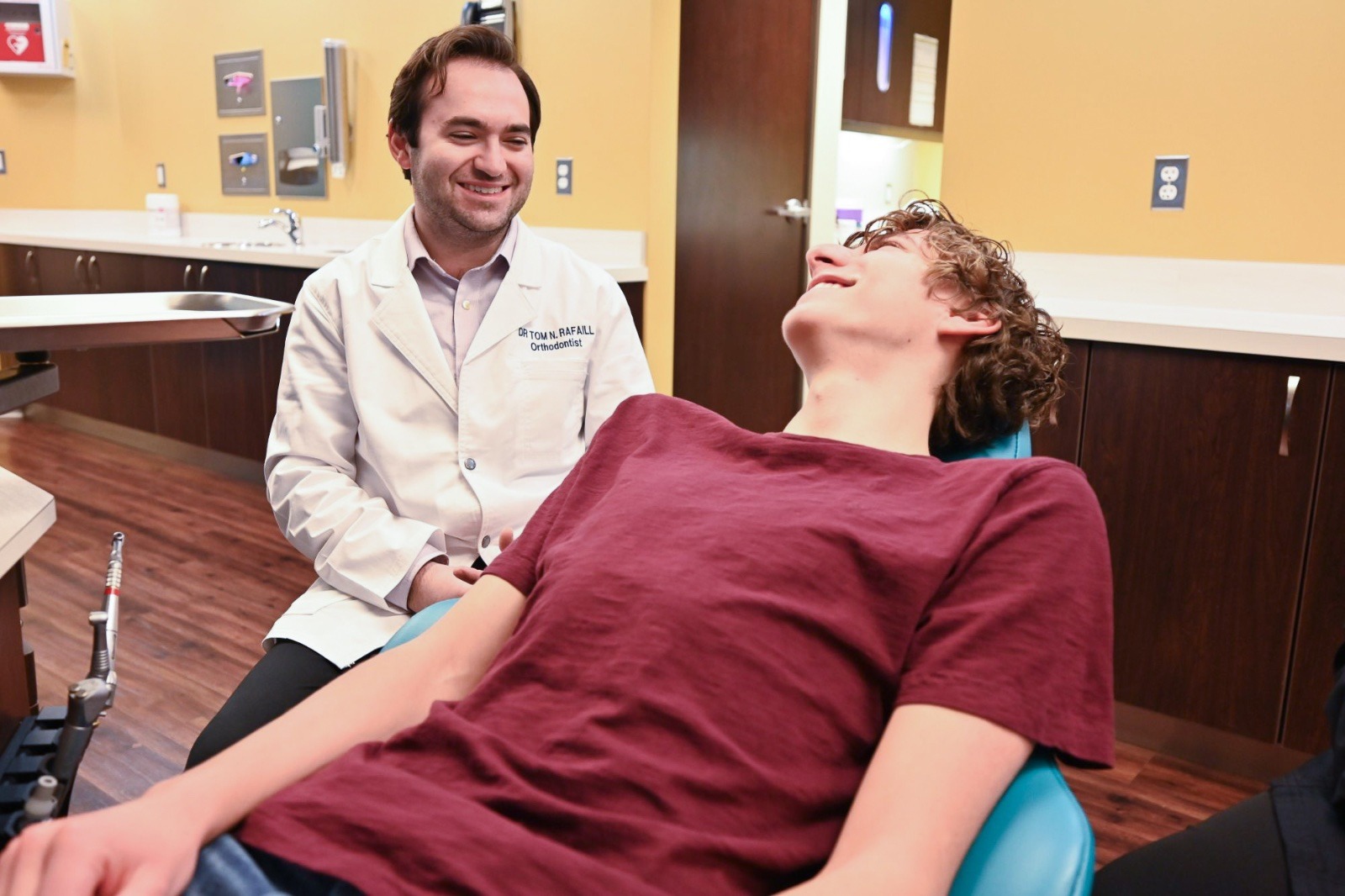
Schedule a Free Consultation in Rochester Hills
Ready to straighten your smile with confidence? Your free consult at Straight Smiles Orthodontics comes with no pressure and no obligation. You'll leave with a clear picture of your treatment options and an honest timeline.
Dr. Nicholas Rafaill, Dr. Thomas Rafaill, and the team treat children, teens, and adults. As members of the American Association of Orthodontists, the American Dental Association, the Michigan Association of Orthodontists, and the Charles H. Tweed International Foundation for Orthodontic Research and Education, and with Dr. Nicholas Rafaill voted Top Orthodontist by general dentists in Hour Detroit Magazine, we bring 3 generations of family orthodontic care to every visit, serving the area since 1961.
Our office in Rochester Hills welcomes new patients, along with our Shelby Township and Commerce Township locations. Call 248-963-0080 or request your free consult online to get started. Changing lives, one smile at a time.